Cities and municipalities – like districts and regions – operate in complex and uncertain environments. Neither the drivers that will matter in the future nor their development can be predicted precisely. Planners and decision-makers in public administration, politicians and interested citizens therefore need to engage with several possible futures. They also need to find ways both to adapt to external conditions they can barely influence and to make the best possible use of their municipality’s own room for manoeuvre.
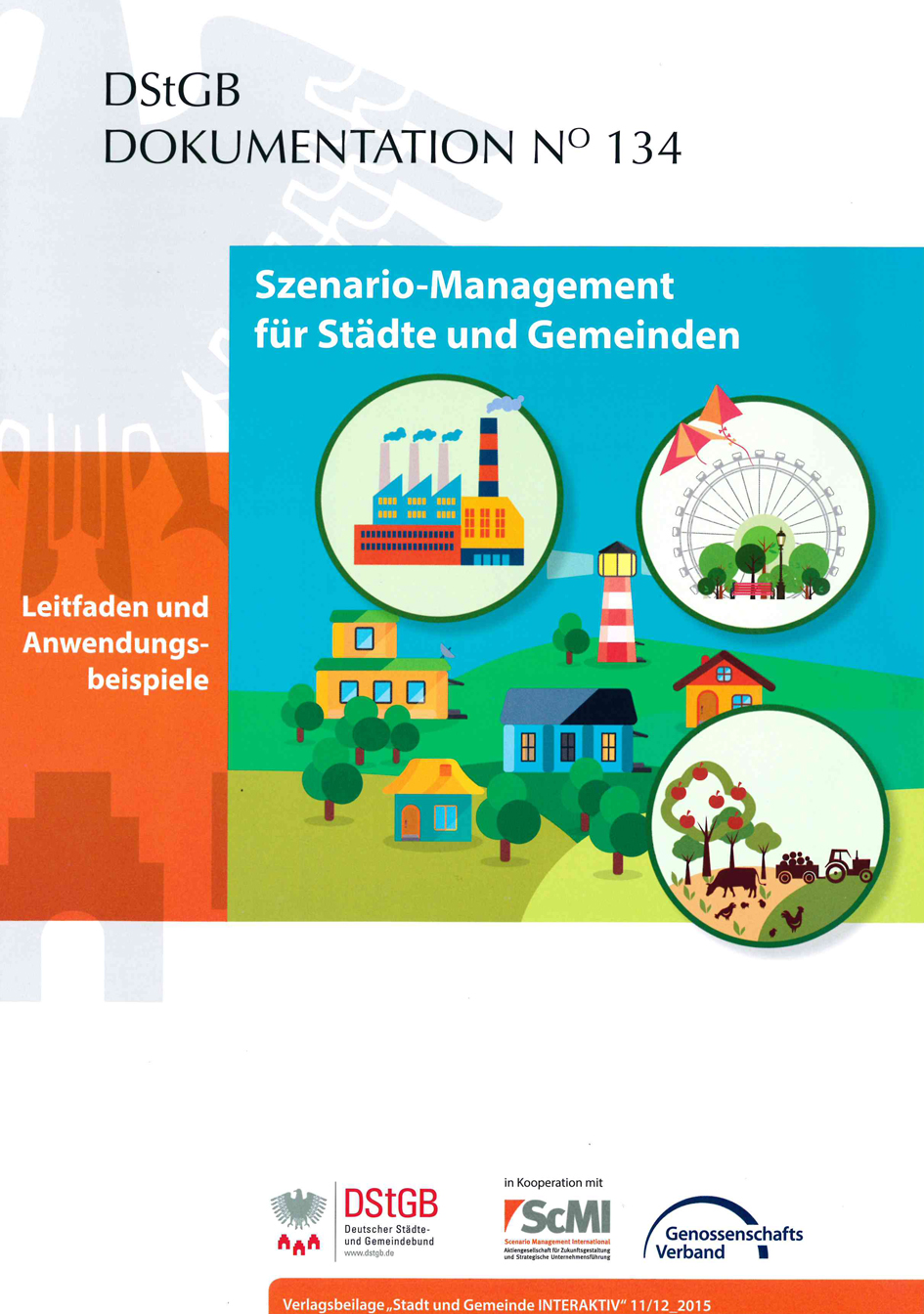
Scenario Management is a framework for supporting such strategic decision-making and orientation processes. A guide developed jointly with the German Association of Towns and Municipalities (DStGB) and the Cooperative Association presents the essential foundations. The methodology is illustrated using scenarios for the future of rural areas in Germany. After presenting different ways scenarios can be used, the guide describes several practical applications:
- As part of sports-facility and school-development planning in the city of Minden, external scenarios were first developed to help the regional administrative and economic centre prepare for changing conditions. Municipal scenarios were then developed and consolidated into a strategic direction.
- A two-day scenario conference developed options for action and alternative strategic concepts for the Hameln-Pyrmont district, from which a shared guiding and target vision was derived.
- The third example shows how Bosch developed scenarios for the Smart City field and the six possible futures that emerged.