Transport & Logistics
Transport and logistics systems are among the essential foundations of modern societies. They enable economic value creation, social participation and global connectivity. At the same time, these systems are coming under growing pressure: climate targets, demographic change, geopolitical tensions and technological disruption are challenging existing structures. These challenges affect not individual players, but the entire mobility and logistics system - from airlines and railways to airports, ports, freight forwarders and public transport operators. In this situation, it is no longer enough simply to organise transport more efficiently. The decisive question is how mobility and logistics can be shaped over the long term amid competing objectives such as growth, sustainability, resilience and societal acceptance. ScMI future scenarios help make these trade-offs visible and systematically explore alternative development paths.
Structural change in mobility and logistics
The underlying logic of transport and logistics is changing. Digital control, automation and data-driven planning promise efficiency gains, but also create new dependencies and vulnerabilities. Platforms, integrated mobility services and intermodal systems are challenging traditional roles: mobility providers, infrastructure operators and logistics service providers are converging, while established responsibilities are becoming blurred. Demand and usage are changing as well: ownership is becoming less important, while availability is gaining relevance. Public and private providers need to realign their business models between commercial viability, public-service obligations and growing regulatory pressure. Scenarios help explore which structural models could prevail in the long term - and which may reach their limits.
Systemic trade-offs and societal expectations
Transport and logistics systems are at the centre of societal debate. Climate action, land use, noise pollution and accessibility are raising expectations of policymakers, infrastructure operators and companies. At the same time, global flows of goods, mobility needs and economic dependencies remain. These tensions cannot be resolved through technological innovation alone. They require strategic decisions about priorities, investment and the distribution of roles within the system. Future scenarios make these trade-offs explicit and enable different future images to be developed - from highly integrated, state-directed systems to market-based, digitally orchestrated mobility landscapes.
Was wäre wenn?
What if mobility is no longer understood as a driver of growth, but as a limited resource?
Transport and logistics systems would have to be reprioritised rather than merely optimised.
What if infrastructure becomes the bottleneck of transformation?
Future viability would depend not on technology, but on the speed of investment and planning.
What if greater efficiency creates systemic vulnerability?
Resilience would become more important than maximum utilisation.
What if public and private mobility logics remain in permanent conflict?
Mobility would have to be renegotiated politically.
What if climate targets change the spatial organisation of the economy?
Global logistics flows would shift fundamentally.
What if transport and logistics are viewed primarily as societal infrastructure?
Responsibility, financing and governance across the entire system would change.
News and Projects
Geopolitics
The Future of Spaceflight
Show Working Paper
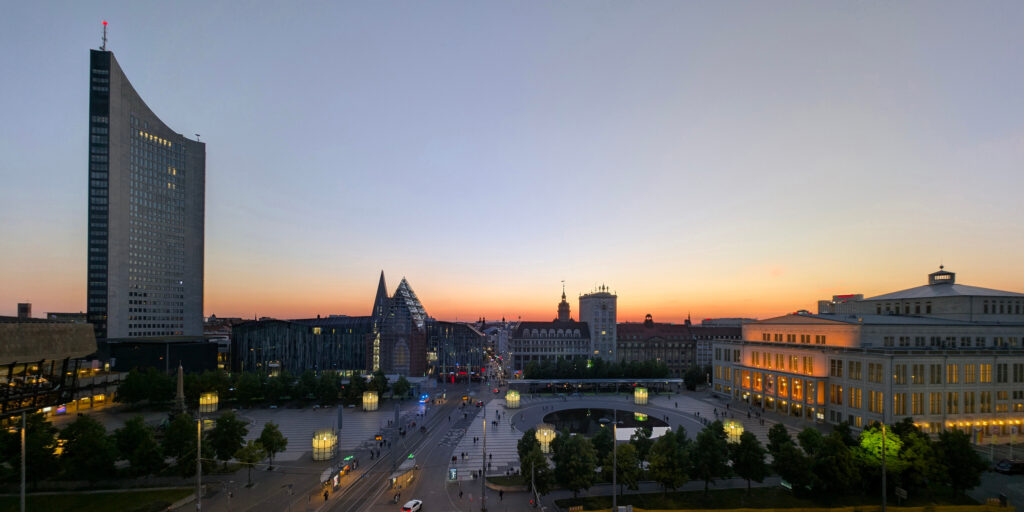
Cities & Regions
Future-Ready Mobility for a Growing City
Show Case Studies
The Mittelstand
The Future Market for Commercial-Vehicle Bodies and Conversions
Show Case Studies
Professional Publications