Industry & Mechanical Engineering
Industry and mechanical engineering form the backbone of many economies - and at the same time are undergoing profound change. Digitalisation, automation, new production concepts and geopolitical uncertainty are fundamentally reshaping industrial value creation. Requirements relating to sustainability, efficiency and resilience are also increasing. In this situation, incremental improvement is no longer enough. Companies need to understand how industrial systems could develop over the long term and what strategic options follow from those developments. ScMI future scenarios help identify possible development paths at an early stage and support robust decisions in an uncertain future.
Technological and structural change
Industry and mechanical engineering are moving from mechanically driven towards data- and software-based systems. Connected machinery, artificial intelligence, digital twins and autonomous production processes are changing products, processes and business models. At the same time, the focus of value creation is shifting: services, software and systems integration are becoming more important, while traditional differentiators are losing their impact. Companies face the challenge of advancing their technological capabilities without losing their industrial foundations. Future scenarios help organisations approach this transformation not only as a technological issue, but as a strategic one.
Strategic and societal challenges
Alongside technological change, external conditions are shaping the future of mechanical engineering. Global supply chains are becoming more fragile, markets more politicised and regulatory requirements more complex. Sustainability, energy efficiency and resource conservation are evolving from additional requirements into core competitive factors. In this area of tension, companies need strategies that remain viable under changing market conditions. Scenarios help structure uncertainty, reveal trade-offs and safeguard long-term strategic capacity beyond short-term planning logic.
Dr. Alexander Fink
Vorstand
fink@scmi.de
Was wäre wenn?
What if machines primarily provide data rather than products in the future?
Value would be created less through sales and more through usage, services and platforms.
What if industrial software becomes more important than mechanical precision?
Competition would shift from engineering craftsmanship to systems architecture and algorithms.
What if production is no longer organised centrally, but in modular and decentralised structures?
Mechanical-engineering concepts would have to be fundamentally rethought.
What if sustainability becomes a prerequisite for market access?
Competitiveness would be determined not only by efficiency, but by environmental performance.
What if supply chains remain permanently uncertain?
Resilience would become more important than pure cost optimisation.
What if industrial business models depend more on political decisions than on technology?
Companies would need strategies that explicitly consider geopolitical scenarios.
What if conventional planning can no longer represent the industrial future?
Scenario work would become a core capability of strategic leadership.
News and Projects
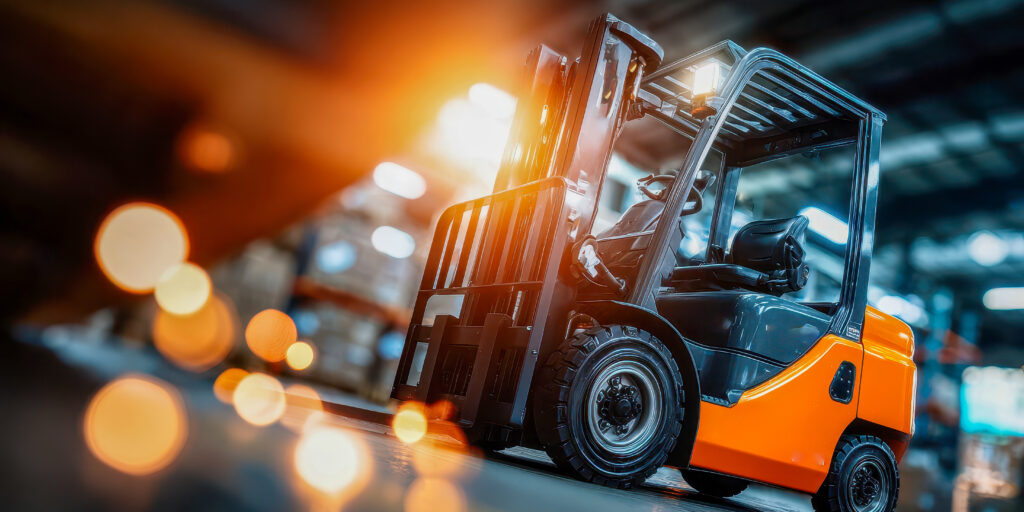
Future Technologies for Mobile Machinery
Zum Projekt
Identifying the Potential of Future Products at an Early Stage
Zum Projekt
Professional Publications