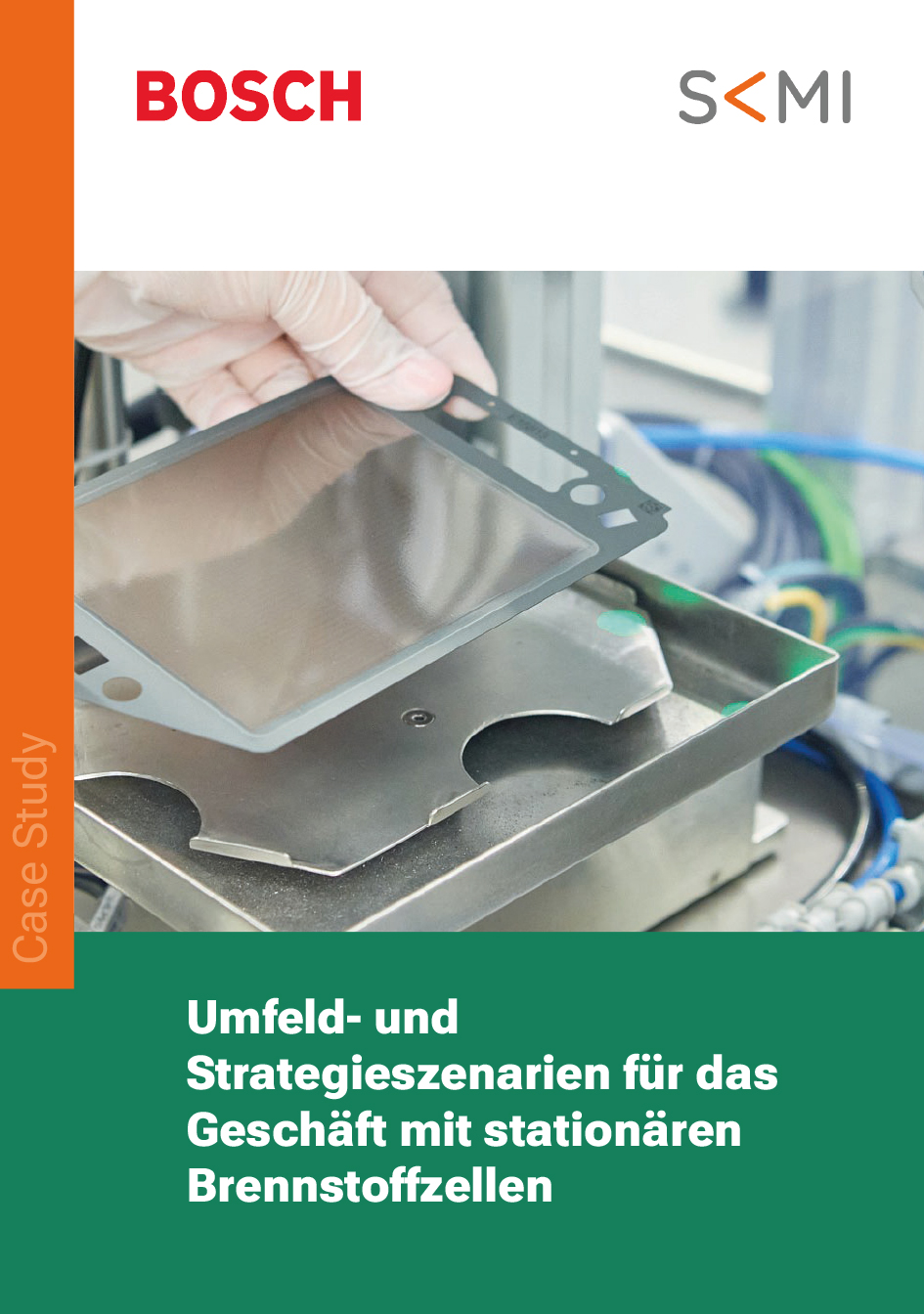
Bosch recognised the potential of stationary solid oxide fuel cells (SOFCs) for climate-friendly and highly efficient energy supply at an early stage. The aim was to analyse the technology’s long-term prospects systematically and derive robust foundations for developing a new business field. Together with ScMI, Bosch therefore launched a multi-year scenario process covering both the future market environment and the company’s own strategic options.
The project team first developed comprehensive market-environment scenarios for the future energy system. A detailed analysis of political, social, economic and technological factors produced twelve consistent scenarios, which were grouped into five overarching energy worlds. These described very different development paths, from traditional energy systems to widespread penetration of hydrogen-based decentralised energy supply. The scenarios were also assessed for different world regions and deepened through regional deep dives with local experts to identify attractive future markets at an early stage.
Building on the market-environment scenarios, Bosch and ScMI developed strategy scenarios to systematically analyse the company’s own room for manoeuvre. The clear distinction between the external market environment and internal strategic options proved particularly valuable in an international context. The project provided robust decision foundations for further development of the business field and demonstrated how scenarios support sound strategic decisions even under substantial technological and regulatory uncertainty. Bosch’s decision several years later to discontinue the industrialisation of stationary SOFC systems as market conditions changed reinforces the project’s core value: the future cannot be predicted, but it can be explored systematically and prepared for strategically.