The work built on the findings of the scenario study The Future of the Food Industry – How Will We Eat in 2030?, developed in 2017 by the Food Cluster at the Competence Center for Nutrition (KErn) together with ScMI AG. An interdisciplinary team had developed eight scenarios describing how the food industry could change over the following decade. The subsequent COVID-19 study addressed two specific questions.
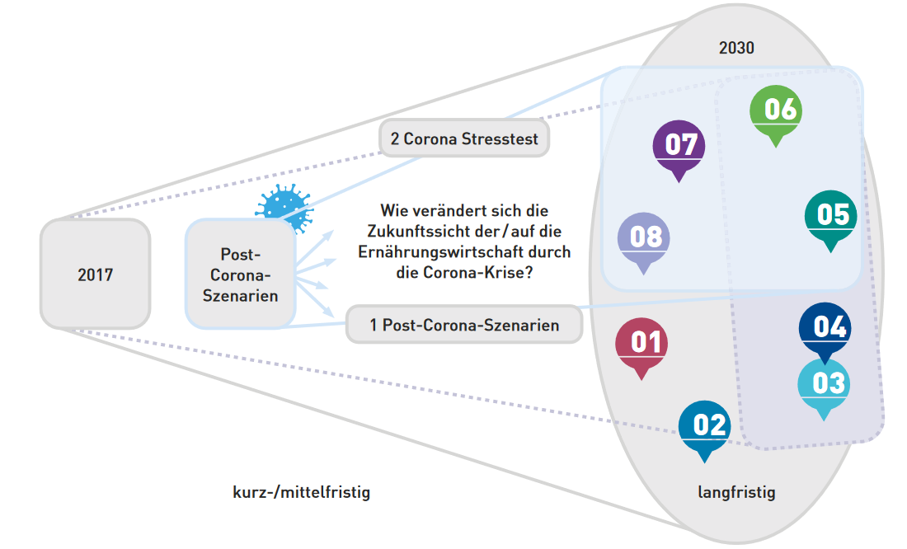
1. How is the COVID-19 pandemic changing the food industry?
The first part of the study examined how the pandemic affected the food industry and the business activities of its different stakeholders. A systematic process was used to develop Post-COVID Scenarios describing possible configurations of the food industry around 2022/23.
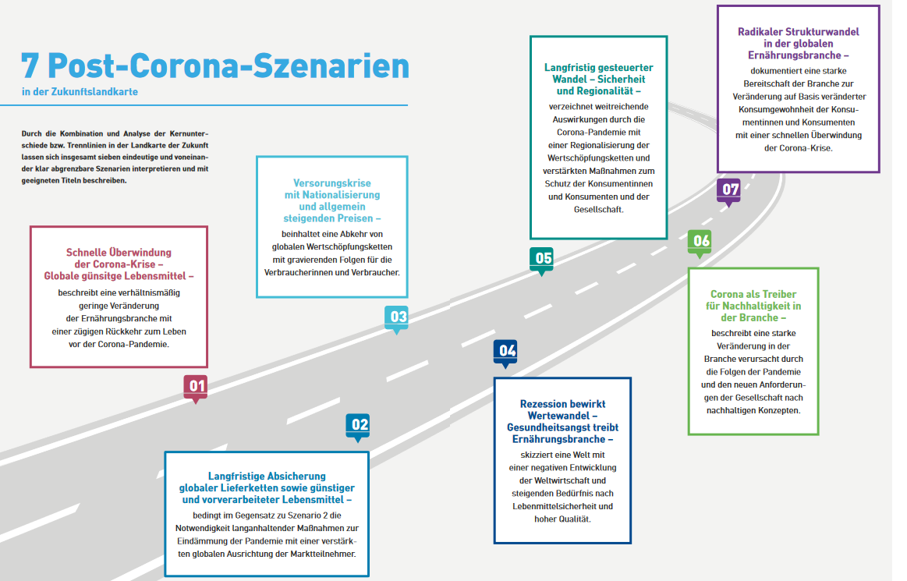
The seven newly developed Post-COVID Scenarios for the food industry showed that, although the crisis primarily posed risks, it could also create opportunities. The pandemic could accelerate trends already evident at the time, such as a stronger regional focus and greater sustainability. The second part of the study explored which developments industry experts expected.
2. How does the COVID-19 crisis change the long-term outlook for the food industry?
The second part of the study updated the assessment of the long-term scenarios. Comparing the 2017 results with new assessments from a COVID-19 stress test revealed changes over the intervening years and showed how the pandemic had altered long-term expectations.
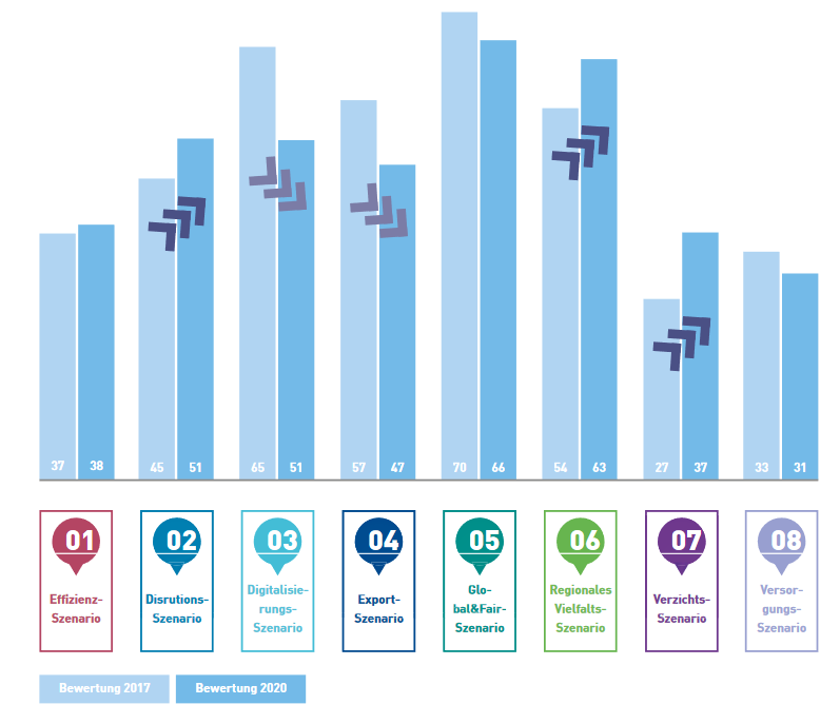
The results show that the COVID-19 crisis, together with other developments over the preceding three years, significantly changed expectations for the industry’s future. Scenarios 6 and 7, in particular, were considered more likely than in the 2017 assessment. These scenarios emphasise a stronger regional focus and assume a greater role for the public sector in shaping the food system.
The wider expected-future space also shifted markedly. The export scenario (Scenario 4) was considered substantially less likely than in 2017. This could indicate that traditional business models in the food industry were coming under pressure.
The detailed findings of the study, to which several companies from the food industry contributed, are available here as a free download.