
The study was commissioned by the Bavarian Centre for Tourism (BZT) and developed with an interdisciplinary group of experts. Using Scenario Management™, the key drivers of urban tourism were identified, combined into consistent future visions and validated in a multi-stage process. The aim was not to predict one probable future, but to make different plausible development pathways systematically visible.
The eight scenarios can be positioned on a scenario map along two central development dimensions. First, the role of tourism in urban development ranges from a focus on economic value creation to a stronger emphasis on quality of life and sustainability. Second, the scenarios differ in the structure of tourism demand – from leisure- and experience-oriented travel to a stronger influence of business travel. The map highlights the different strategic positions that could result for cities and destinations.
Scenario overview
• Boom in Short Breaks (Scenario 1): Short trips and day tourism shape the market. Attractive leisure offerings draw large numbers of day visitors, while business travel provides a stable economic base.
• Tourism as a Driver of Urban Development (Scenario 2): Sustainability, quality of life and tourism are successfully combined. Smart-city concepts and authentic offerings strengthen both visitor appeal and acceptance among local residents.
• Integrated Bleisure Growth (Scenario 3): Business and leisure travel increasingly merge. Cities create integrated offers for work, leisure and culture and benefit from this close interconnection.
• Staying with Friends (Scenario 4): High quality of life and strong citizen participation shape urban development. Visitors experience authentic destinations with a strong regional identity.
• Externally Driven Leisure Boom (Scenario 5): Leisure tourism grows dynamically and is increasingly shaped by large tourism providers. Economic success takes priority, while local scope for shaping development declines.
• Deliberate Slowdown (Scenario 6): Cities deliberately limit tourism growth in favour of sustainability, quality of life and regional identity. Quality becomes more important than quantity.
• Empty Backdrops (Scenario 7): Economic challenges and declining visitor numbers lead to falling investment and a substantially reduced role for tourism in cities.
• Business Tourism Takes Priority (Scenario 8): Cities concentrate on their role as business locations. Business travel and MICE offerings dominate, while leisure tourism recedes into the background.
The study shows that the future of urban tourism depends on a range of social, economic and political developments. The scenarios are therefore not forecasts, but tools for orientation and discussion. They help destinations and municipalities identify opportunities and risks at an early stage, test the robustness of their strategies and actively shape the future development of urban tourism.
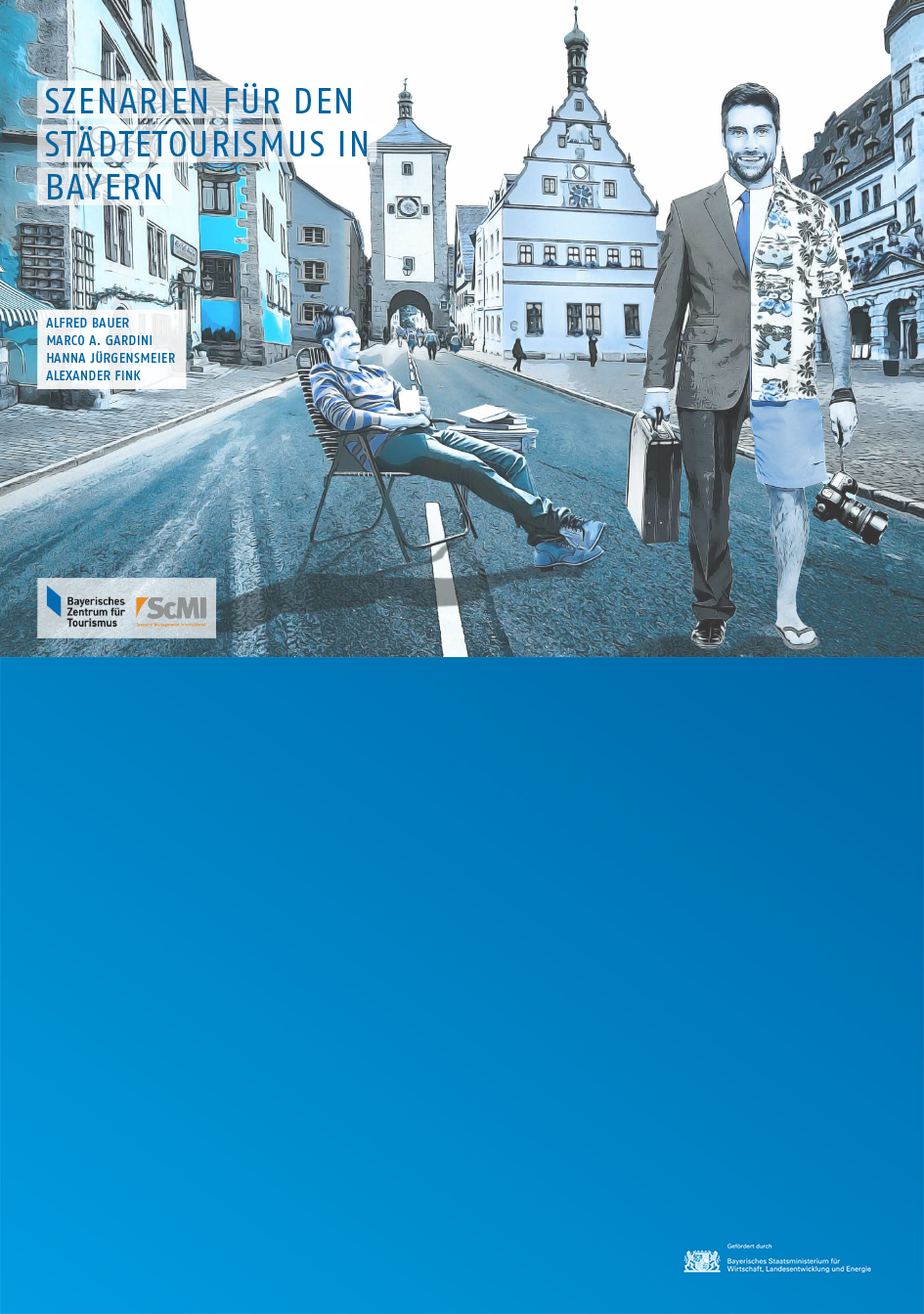
Scenarios for Urban Tourism in Bavaria
A Scenario Process by the Bavarian Centre for Tourism (BZT)
Urban tourism in Bavaria is set to change significantly by 2040 under the influence of sustainability, digitalisation, mobility, demographic change and new travel habits. This scenario study describes eight distinct futures, spanning the full range of possibilities for the development of Bavarian cities as travel destinations. It helps destinations, municipalities and tourism actors develop long-term strategies and prepare sound decisions under uncertainty.
Ansprechpartner*in

Hanna Rammig
Prokurist
rammig@scmi.de
Dr. Alexander Fink
Vorstand
fink@scmi.de
Weitere Insights

Working Together for Good Jobs in the Lahn-Dill District
Zum Beitrag
Ukraine Stress Test
Zum Beitrag

The Future of Work in Retail
Zum Beitrag