Geopolitics
Geopolitics and security increasingly shape the global conditions for economic activity, political governance and social stability. Shifts in power between states, the return of geopolitical rivalry and new forms of hybrid conflict are transforming an international order that was long taken for granted. Security now extends far beyond military concerns: it encompasses economic dependencies, technological sovereignty, critical infrastructure, information spaces and the resilience of open societies. Geopolitics and security are therefore key influence factors in almost every strategic decision.
A fragmented world order as the new starting point
The international order is undergoing a fundamental transformation. Multilateral institutions are losing their binding force, while geopolitical competition, national interest-based policies and regional power blocs are gaining importance. This creates new risks for states, businesses and organisations, but also new constraints: supply chains are becoming politicised, investment decisions are being assessed through a security lens, and technological dependencies are turning into strategic vulnerabilities.
Security can no longer be clearly separated from other policy areas. Energy supply, food security, data infrastructure and trade relations are all part of a broader understanding of security. Crises spread more quickly and overlap: military conflicts, economic shocks, migration and disinformation campaigns reinforce one another and call existing governance models into question.
Current debates: deterrence, resilience and strategic autonomy
Current discourse is shaped by traditional security-policy concerns, particularly military deterrence, alliance capability and defence readiness. At the same time, concepts such as resilience, hybrid threats and the protection of critical infrastructure are moving to the fore. Cybersecurity, disinformation and the management of influence operations are recognised as central security challenges.
At the economic level, debate is dominated by strategic autonomy, de-risking, sanctions regimes and the safeguarding of global supply chains. Technology and industrial policy are increasingly justified on security grounds. These discussions often respond to acute crises and short-term threats, while long-term structural changes receive only limited systematic consideration.
Long-term fault lines, escalation risks and uncertainties
Over the long term, it remains open how stable new power constellations will be and whether new forms of international cooperation will emerge or further fragmentation will follow. It is also unclear how technological developments - such as AI, autonomous weapons systems and cyber capabilities - will affect escalation dynamics and the logic of deterrence. The boundaries between war and peace, state and non-state actors, and domestic and external security are becoming increasingly blurred.
Further key uncertainties concern the resilience of democratic societies under sustained geopolitical pressure. How robust are political systems in the face of polarisation, economic costs and security-related demands? What roles will Europe and Germany play in a world where security guarantees can no longer be taken for granted? Scenarios make it possible to analyse different geopolitical development paths, levels of escalation and forms of cooperation systematically - and to prepare strategic options under conditions of high uncertainty.

Dr. Alexander Fink
Vorstand
fink@scmi.de

Hanna Rammig
Prokurist
rammig@scmi.de
News and Projects

Geopolitics
Scenarios for the Future of Africa
Zum Projekt
Geopolitics, Germany & Europe as Business Locations
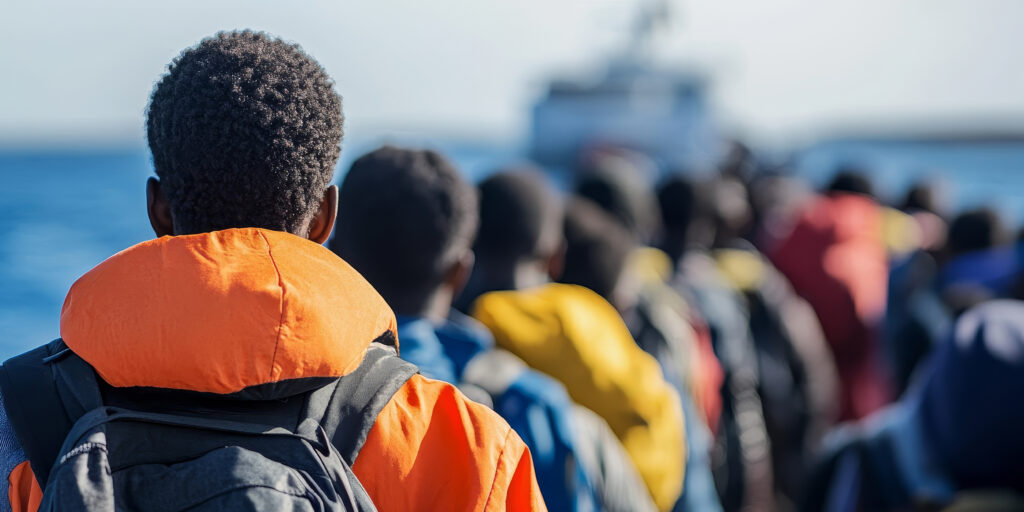
Scenarios for the Future of European Border Management
Zum Projekt

Geopolitics
Future Scenarios for International Security and Peace Policy
Zum Projekt
Geopolitics
The Future of Spaceflight
Zum Projekt

Geopolitics
Future-Proofing Austrian Security Policy
Zum Projekt
Geopolitics
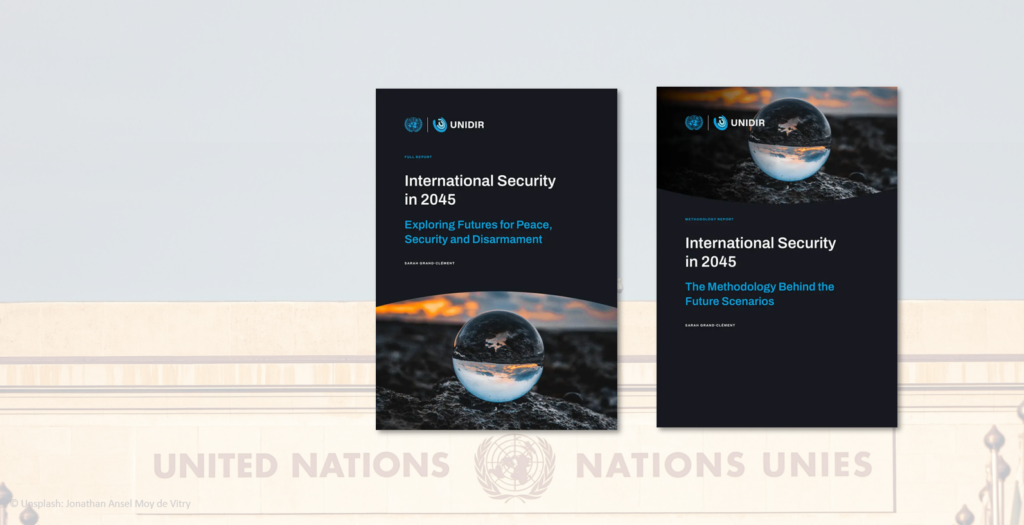
UN report: The future of international security
Zum Projekt
Professional Publications