Governments, Public Administrations & Public Institutions
Governments, public administrations and public institutions are responsible for stability, security and long-term development. They shape frameworks, regulate markets and safeguard essential societal functions - from infrastructure and environmental and health protection to security and defence. At the same time, they face growing pressure: multiple crises, geopolitical tensions, accelerating transformations and a loss of trust are making long-term government action more difficult. In this environment, governance is becoming more complex and uncertain. Conventional planning and forecasting instruments are reaching their limits. ScMI future scenarios help public-sector actors structure uncertainty systematically and strengthen strategic capacity across electoral cycles, departmental boundaries and institutional responsibilities.
Government action in complex, interconnected systems
Public institutions now operate in highly interconnected systems in which political decisions generate economic, technological and societal feedback. Issues such as the energy transition, digitalisation, security and demographic change can no longer be addressed in isolation. At the same time, dependencies on international markets, technologies and geopolitical developments are growing. This complexity challenges established forms of governance. Scenarios make different development paths visible - from cooperative, multilateral orders to fragmented, conflict-ridden futures - and support the assessment of policy options within a broader strategic context.
Legitimacy, trust and long-term strategic capacity
Public action faces growing pressure to justify itself. Citizens expect transparency, participation and effectiveness, while political decision-making is often perceived as reactive and short-term. At the same time, public administrations must make long-term investments, manage risk and moderate societal transformation. Future scenarios help public institutions make long-term perspectives visible, communicate trade-offs openly and explain political decisions transparently. They create a shared frame of thought for strengthening trust and structuring processes of societal negotiation.
What if
What if government planning systematically fails in the face of uncertainty?
Strategic foresight would become a core capability of public action.
What if geopolitical risks become the dominant political variable?
Priorities would change across almost every policy field.
What if transformation moves faster than political decision-making?
Governance capacity and legitimacy would come under pressure.
What if public institutions are perceived as risk managers rather than active shapers?
The self-understanding of government action would change.
What if societal trust continues to erode?
Transparency and participation would become strategic necessities.
What if security has to be redefined in technological, environmental and social terms?
Government action would need integrated future images rather than sector-specific strategies.
What if scenarios become a shared frame of reference?
Politics, public administration and society could negotiate the future together.
News and Projects

Cities & Regions
Working Together for Good Jobs in the Lahn-Dill District
Zum Projekt

nnovation, Education & Research
Future University Worlds
Zum Projekt

Democracy & Society
Post-COVID Scenarios
Zum Projekt

Sustainability
Integrated Scenarios within the National Sustainable Development Strategy
Zum Projekt

The World of Work & Skills
Contours of the World of Work 2030 – Future Scenarios for Regional Labour Markets
Zum Projekt
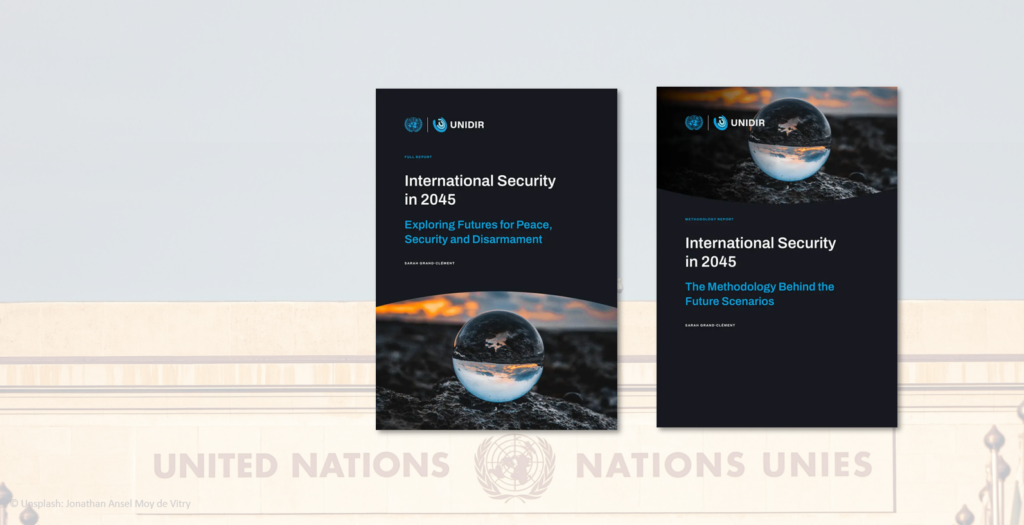
Geopolitics
UN report: The future of international security
Zum Projekt
Professional Publications